What we do
Clinical care
{{articleInView.title}}
Clinical care
Our Clinical Governance team takes care of policy, practice and processes for continual improvement and supports all staff at Wellington Free Ambulance to deliver excellent patient care.
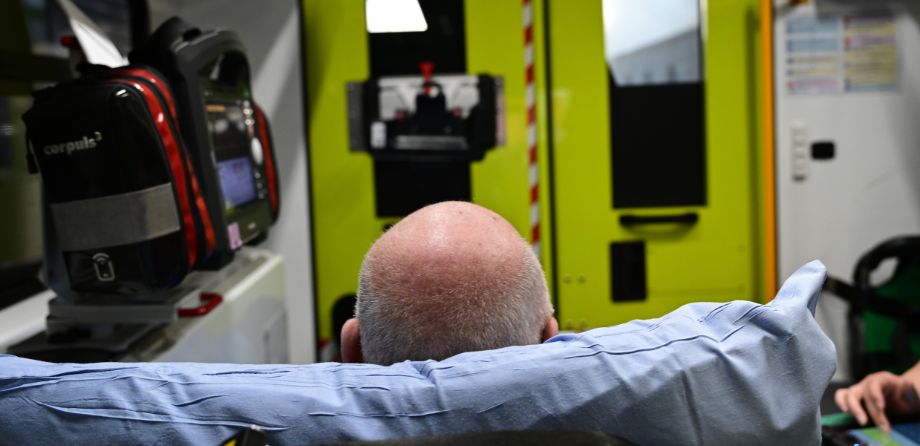
Our clinical practice is overseen by Executive Medical Director Dr Erica Douglass, alongside Medical Directors Dr Andy Swain and Dr Dave O'Byrne.
The clinical team works with all parts of the business to make sure our patients receive the best possible care. They:
- Design and regularly review Clinical Procedures and Guidelines that all paramedics use in their day-to-day work.
- Constantly review paramedic national and international sector standards to keep pace with today’s best practice knowledge and changing service needs.
- Take part in sector wide clinical initiatives and new developments.
- Carry out clinical audits and monitor our practice against international best practice Clinical Quality Indicators.
- Review and share organisational learnings from complex cases.
- Review and approve new clinical equipment.
Clinical Procedures and Guidelines
This national document guides our clinical practice to ensure safe and consistent care for all of our patients.
These guidelines are presented for informative purposes only. Only those with an authority to practice issued by Wellington Free Ambulance may use these guidelines for the provision of patient care. These guidelines may change from time to time and Wellington Free Ambulance does not guarantee their accuracy once downloaded or printed.
Clinical Procedures and Guidelines
If you wish to make any formal comments or enquiries regarding these guidelines please contact: Chair of the National Ambulance Sector Clinical Working Group c/o Ambulance New Zealand, PO Box 714, Wellington.
Adverse events
We take providing high-quality patient care extremely seriously. We strive to do our very best for patients and their families every time we attend an incident.
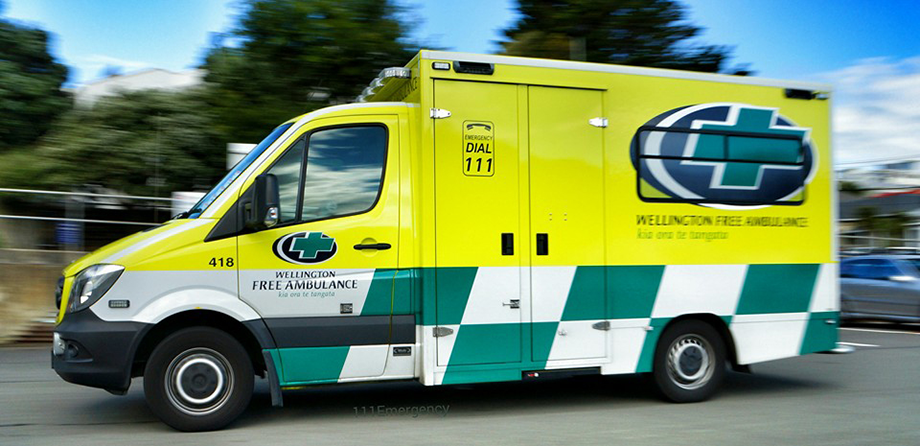
We have a process for identifying, investigating, and learning from events where patient care has not been to the standard we would expect. This involves a team of our clinical, operational and 111 communications centre experts coming together regularly to review information received via patient feedback, complaints, or from our own quality assurance process.
Every investigation results in a set of recommendations for improvement, and as much as possible we keep the patient and their family informed of our progress and findings. As well as our own investigation, serious (SAC1 and SAC2) events are reported to the Ambulance Team and the Health Quality and Safety Commission.
For information about how adverse events are coded, and to view previous events visit the Health New Zealand website.
We use the World Health Organization event codes to classify all events. More information on these codes can be found in the National Adverse Events Reporting Policy 2017. A copy of this policy is available here.
Please note: if a quarter isn't listed below, it's because no events were reported during that timeframe.
- Reportable Events July - September 2025
- Reportable Events April - June 2025
- Reportable Events January - March 2025
- Reportable Events October - December 2024
- Reportable Events July - September 2024
- Reportable Events April - June 2024
- Reportable Events October - December 2023
- Reportable Events April - June 2023
- Reportable Events January - March 2023
- Reportable Events October - December 2022
- Reportable Events July - September 2022
- Reportable Events April - June 2022
- Reportable Events January - March 2022
- Reportable Events October - December 2021
- Reportable Events July - September 2021
- Reportable Events April - June 2021
- Reportable Events January - March 2021
- Reportable Events October - December 2020
- Reportable Events July - September 2020
- Reportable Events April - June 2020
- Reportable Events January - March 2020