About us
Our news
Meet Event Medic Leon
Meet Event Medic Leon
 01 December 2025
Leon joined Wellington Free Ambulance at the end of 2019, just as the world was about to change. Training during the COVID-19 pandemic, he became an event medic, and it ended up being the spark that lit a new path. Now, he's nearing the end of his first year studying paramedicine at Whitireia, having made a bold transition into a career he’d been quietly drawn to for years.
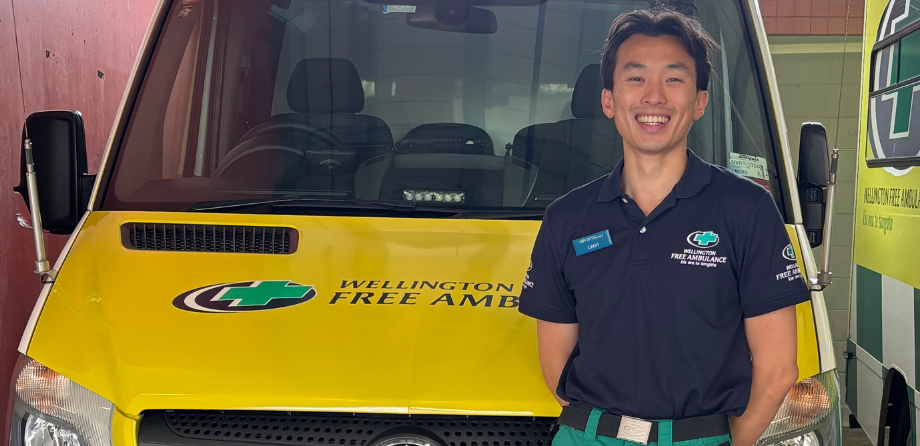
“I kind of stumbled into the role by chance,” Leon says. “My NZ Police application was paused due to COVID-19, and I came across the event medic opportunity. That finally pushed me to explore paramedicine properly and I haven’t looked back.”
A moment that planted the seed
Leon’s passion for emergency care has deep roots. When he was just 11 years old, he witnessed paramedics respond to his grandfather’s cardiac arrest.
“Although the outcome wasn’t what we hoped for, I remember how calm and safe the paramedics made us feel. That really stuck with me,” he says.
Years later, while studying psychology and criminology, he became a first aid instructor. He then worked in the humanitarian aid, disaster response and emergency management space, but paramedicine always hovered in the background.
Prepared for anything
Event medics at Wellington Free support a huge variety of events from concerts and sports games to niche community gatherings like medieval combat tournaments.
“No two events are the same. You could be rushed off your feet treating patients all day, or you could be standing by, chatting with the community and soaking up the atmosphere,” Leon says.
“But being ready is key. We get briefed a few days out, do our equipment checks, and arrive early to make sure the ambulance is good to go.”
It’s a role that requires sharp clinical skills, but also people skills. Sometimes it’s not just about treating injuries but being present, being visible, and being a reassuring part of the community.
Staying calm in the chaos
Events can be unpredictable. That unpredictability is part of what makes the role challenging but also rewarding.
“We train and prepare for the high-pressure situations,” Leon explains. “But honestly, a lot of it comes down to slowing things down. Taking a deep breath. And leaning on the support of your team. I’ve had amazing mentors at Wellington Free who’ve helped shape how I manage those moments.”
Crowds can add to the complexity. “Sometimes people want to help but end up making things harder. Other times, panic spreads fast. You’ve got to stay grounded and aware of your surroundings.”
More than just flashing lights
Leon says people often assume the role is all about trauma and adrenaline, but that’s only part of the picture.
“We’re there to help, of course, but also to connect with people. Sometimes it’s showing a curious kid around the ambulance or having a conversation with someone who just needs a moment of connection.”
Leon has also been involved with The Lloyd Morrison Foundation Heartbeat Programme, teaching lifesaving skills to people across the community. “That kind of outreach shows how broad our role really is.”
The people that make it worth it
“He tāngata, he tāngata, he tāngata – the people, the people, the people,” he says. “Wellington Free Ambulance is whānau. I’ve felt so supported here, by mentors, by colleagues and by the community.”
Being on the ground at events gives Leon a unique window into how Wellington communities come together.
“You realise how much everyone contributes to that sense of belonging. You learn a lot just by saying hello.”
And while he’s moved into studying full-time, Leon still makes time for events when he can. “It keeps me connected and reminds me why I chose this path.”
Looking ahead
Leon’s route into paramedicine has been shaped by diverse experiences, all leading him to where he’s meant to be
“It feels right,” he says. “And I’m proud to be part of a team that shows up for our communities in so many ways.”