About us
Our news
Meet Relief Call Taking Supervisor and mentor Alex
Meet Relief Call Taking Supervisor and mentor Alex
 19 June 2026
Alex works in the Clinical Communications Centre at Wellington Free Ambulance, where he is a relief call taking supervisor and mentor. After starting his journey as a call taker, Alex has stepped into a leadership role supporting the team responsible for answering emergency calls and guiding callers through critical moments.
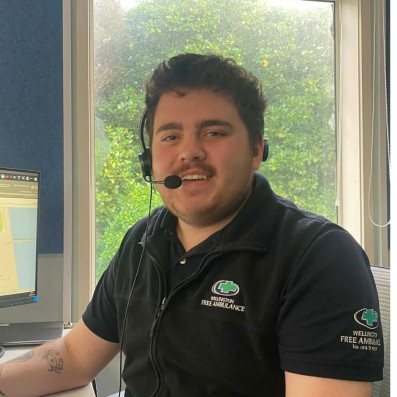 For Alex, the role is about helping others grow in confidence while ensuring callers receive the guidance they need during an emergency.
“I’ve always been drawn to roles where the focus is on supporting my community,” Alex says.
Growing up, he took every opportunity to put himself in positions where he felt he could make a positive impact: from representing his class at college to eventually landing a job as a call taker here.
“Over time, I started reflecting on what I wanted my purpose to be at work. I realised what really motivates me is being able to support people in being more confident, safe and effective in their role.”
When an opportunity came up for him to become a mentor, and later a relief call taking supervisor, it felt like a natural step in the right direction.
An early interest in emergency services
Alex’s interest in emergency services began when he was younger.
“It’s quite cliché of me to say, but what really caught my interest was the lights and sirens side of it all,” he says.
After attending a Life Flight open day and later visiting his local police station for a tour, his curiosity about emergency services continued to grow. Through volunteer work, he met people across different services who helped him understand the range of roles involved in keeping communities safe.
“They really opened my eyes to the different roles that have a part to play in making a service like this function.”
Today, Alex says the team is what keeps him motivated.
“They are some of the most amazing people I’ve ever worked with, and they are all super passionate about the work we’re doing.”
Stepping into the supervisor role
Alex has been working as a relief call taking supervisor for over five months.
The role focuses on supporting call takers during their shifts, providing guidance on complex calls and helping manage incidents across the country.
“The main role is supporting the call takers on your shift, which could mean anything from providing guidance on a complex job to following up on an incident anywhere in the country.”
Alongside supporting the team, Alex also keeps an eye on incidents coming through to Wellington, including calls taken by staff in Auckland or Christchurch, ensuring anything out of the ordinary is handled appropriately.
Supporting call takers during high-pressure moments
Working in the communications centre means high-pressure calls can come through at any time. For Alex, providing clear and direct guidance in those moments is essential.
“When a high-pressure job comes through, call takers don’t want a long explanation about how to handle something in the moment - they just want a clear answer so they’re not holding up their caller.”
After particularly stressful calls, Alex often holds a ‘hot debrief’ to talk through what happened and explain the reasoning behind certain decisions.
“One of the biggest things for me is making sure I’m visible and engaged with the team as much as I can be. That really helps to build the trust that I know what I’m talking about.”
Guiding through difficult calls
While Alex hasn’t had many challenging calls yet in his supervisor role, one situation from his time mentoring a trainee stands out.
A caller reported that someone had fallen through a glass sliding door and suffered a significant laceration to their neck. The caller described the blood as pouring out, and regular bleeding control instructions were not working.
Alex recognised early that a rarely used set of instructions for uncontrolled bleeding from the neck would likely be needed.
Rather than stepping in and taking over the call, he stayed alongside the trainee call taker to support them.
“I made sure they were giving clear and concise guidance to the caller, guiding them through which panels to move and what clarifying questions they could ask.”
The trainee remained in control of the call, helping reassure the caller until the ambulance arrived.
Supporting wellbeing on shift
Supporting team wellbeing is also an important part of Alex’s role.
“Looking at supporting the team in a broader context is all about the small things.”
That might include organising a potluck dinner on shift or someone bringing snacks to share. Between calls, conversations often focus on what people are doing on their days off or what they have planned for their leave.
While everyone supports each other, Alex also steps in when someone needs additional help.
“That might mean looking at case reviews, talking through recent calls, or setting aside some time to do some self-directed learning.”
Maintaining perspective
Managing his own wellbeing while overseeing high-stress situations can be challenging.
“It’s not always possible to pause in the moment, so taking the opportunity to decompress afterwards is really important.”
Maintaining perspective also helps him manage the pressure.
“Knowing that we did the best we could with the information we were given is really important. Reminding myself that I’m not the patient and it’s not my emergency allows me to focus on making sure the best help gets arranged.”
Outside work, Alex focuses on healthy habits such as meal prepping and prioritising sleep so he can give his full attention to the job when he’s on shift.
Seeing others grow
For Alex, the most rewarding part of the role is seeing how people develop over time.
“Watching someone I first met during their pre-training observations start taking complex calls on their own is incredibly fulfilling.”
Being able to give guidance and then step back while someone confidently manages a difficult situation is one of the highlights of the job.
Supporting health and safety
Alongside his operational role, Alex is also a health and safety representative.
“I believe everyone has a role to play in keeping people healthy and safe at work and this is my way of fulfilling that role.”
Within the Clinical Communications Centre, Alex helps advocate for colleagues and works to address the disconnect some staff may feel from the work they’re doing.
“As much as we’re helping people all around the country, we still wear the uniform and represent Wellington Free.”
His role includes representing communications centre staff in wider discussions across the organisation and supporting practical initiatives such as helping colleagues access the incident reporting system and keeping the health, safety and wellness noticeboard updated.
Through mentoring, supporting the team, and advocating for their wellbeing, Alex plays an important role in ensuring the people behind the calls feel confident, supported, and ready to help when it matters most.