About us
Our news
Meet Call Taker Rebecca
Meet Call Taker Rebecca
 05 June 2026
Rebecca is part of the team at Wellington Free Ambulance, where she works as an emergency call taker. After 16 years working in banking, Rebecca made the move to Wellington Free in late October 2025, stepping into a role that places her at the very start of someone’s call for help.
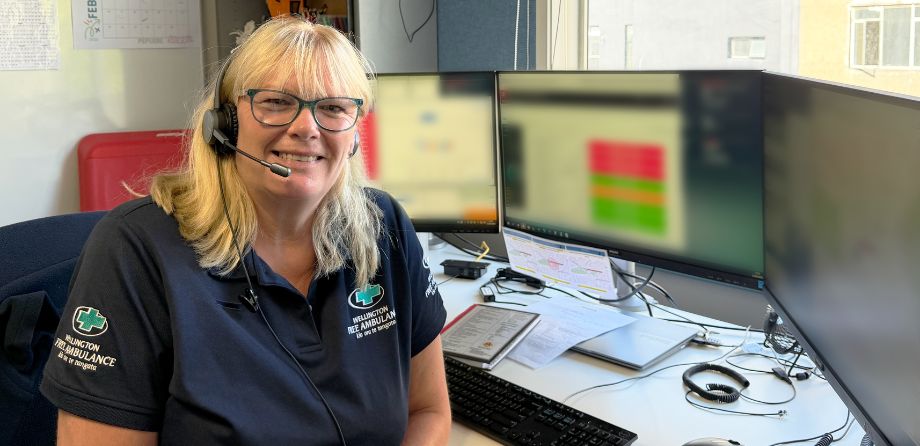
Rebecca is a married mum of three and enjoys walking, biking, spending time at the beach, and catching up with family and friends. Family is at the heart of everything she does and it’s also what inspired her journey into the ambulance service. Her daughter works for Wellington Free Ambulance and was previously an emergency call taker, giving Rebecca a close-up view of the incredible work the team does every day.
“I wanted to help people and have experienced first-hand the amazing work that Wellington Free does.”
A new challenge
After years of a Monday to Friday routine, moving into shift work was a significant change.
“It’s a big change from the 5/2 grind but a lot easier than I thought it would be and I’m loving it.”
As a call taker, Rebecca answers incoming emergency calls from people all over the country who need urgent assistance. The way the national communications centre network works, is the next available call taker will answer an incoming call, regardless of where they’re based. In addition to the Wellington centre operated by Wellington Free Ambulance, there are also centres in Auckland and Christchurch. No two days are ever the same. Each call brings a new situation, a new set of emotions and a new opportunity to make a difference.
The first call
Rebecca still remembers how it felt the first time she answered a 111 call.
“Terrified, excited but very rewarding.”
That mix of nerves and purpose has become part of the role. Every shift can bring a huge range of emotions, from adrenaline to relief and everything in between.
“No call is ever the same so there can be a huge change of emotions over a shift.”
Staying steady when it matters most
Working in emergency communications means supporting people who may be experiencing one of the worst moments of their life. For Rebecca, staying calm comes back to perspective.
“Knowing I’m helping someone who might be having their worst day.”
Between calls, looking after wellbeing is essential. Rebecca makes sure to debrief with colleagues if needed and takes the opportunity to step away for five minutes when required. The support of the team around her plays a big part in managing the emotional weight of the role.
Moments that stay with you
Some calls stay with you longer than others. Rebecca recalls one particularly heartbreaking experience.
“I had a caller one morning who had gone to wake their child and discovered they had passed suddenly overnight – extremely sad and such raw emotions throughout the call. A parent’s worst nightmare.”
Calls like this highlight both the privilege and responsibility that come with being the first point of contact in an emergency.
A welcoming team
Since joining in October 2025, Rebecca has found Wellington Free Ambulance to be a supportive and welcoming environment.
“Wellington Free Ambulance is a great place to work; everyone has been so welcoming.”
For Rebecca, being a call taker is about being there when it matters most. It’s about steady voices in moments of panic, compassion in times of grief, and knowing that from behind a headset, you make a real difference.