About us
Our news
Meet Senior Call Taker Kate
Meet Senior Call Taker Kate
 08 May 2026
Kate is a senior emergency medical call taker at Wellington Free Ambulance and a proud Wellingtonian, born and raised.
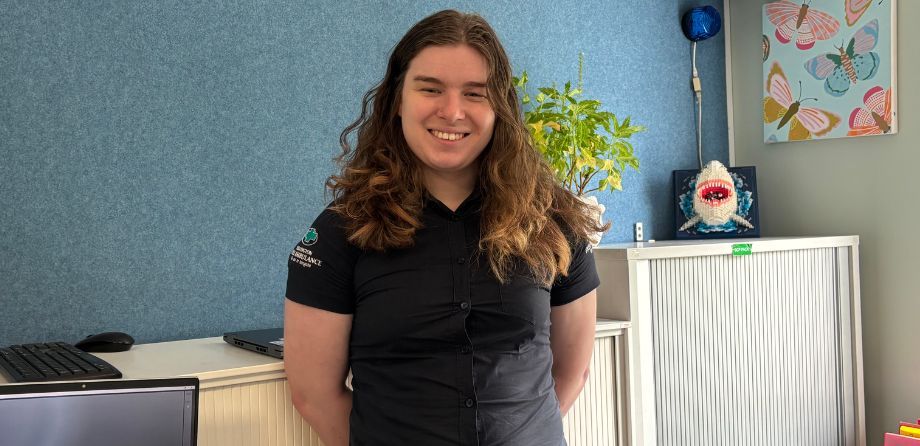
Joining Wellington Free Ambulance at 19, Kate brought with her a strong desire to help people, especially in moments when they can’t help themselves.
“I’ve always been drawn to trying to understand other people,” Kate says. “Public-facing roles can be taxing, but they’re also incredibly rewarding.”
After beginning a semester of psychology at university, Kate realised she couldn’t see the tangible impact she wanted in her future. So, she made the decision to step away and look for something more meaningful.
“It really was sheer coincidence,” she says. “I’d been looking for meaningful employment for a couple of months when a family friend texted me after seeing the job advertised on SEEK. I’m not sure if she even knew I was looking for work.”
At the time, Kate was teaching high school students to sail on a part-time contract. She decided to apply for the role without high expectations. One test led to an interview, and before long, she had secured the position.
The role behind the headset
As an emergency medical call taker, Kate’s job centres around two key responsibilities: triaging the call and managing the caller.
“The first part is sorting the information the caller gives me into what’s relevant and what’s not,” she explains. “That information goes through a triage process to determine the best response for the patient, and then it’s sent through to the dispatcher.”
The second part is often the most emotionally charged.
“Whether it’s controlling bleeding, performing CPR, or supporting someone in mental distress, it’s a heightened environment. You never know what the next call will be or how the caller will react.”
Some callers faint at the sight of blood. Others make jokes while doing chest compressions. For Kate, the unpredictability is part of what makes the role both challenging and rewarding.
“It’s incredibly rewarding work, especially when you can tell your words have helped someone manage their stress.”
That first 111 call
Despite her confidence now, Kate vividly remembers the nerves of her first live 111 call.
“Despite all the weeks of training and preparation, utter dread is an understatement.” she recalls. “I think my heart rate was reaching 180 beats per minute when I put my headset on.”
Her first call lasted only about 10 seconds. Someone wanted to know why an ambulance had driven past them, only to realise it was turning around and coming back to the caller.
“It wasn’t exactly the hugely stressful call I’d been playing in my mind all week,” she laughs. “It’s been a helpful story to share with new trainees.”
Staying calm under pressure
Remaining calm in an emergency is essential even when your body is telling you otherwise.
“Most of the skill behind staying calm comes from simply telling yourself you are calm, even if you don't really believe it.” Kate says. “You can be the soothing voice on the phone for both the caller and, ironically, yourself.”
She explains that much of the role follows established processes, which provides structure in high-pressure moments.
“When the pressure comes on, we know we can rely on those processes to get help arranged. But you can’t prepare for everything.”
With experience, Kate has learned to enter what she describes as a “flow state”, analytical and rational, while still providing reassurance and empathy.
“Sometimes you just have to ask your body to take a rain check on the emotion so that you can focus.”
The moments that stay with you
While many calls blur together, some stay with her.
“It could be very easy to get tangled up in people's situation - but that's not part of our job. We aren't here to solve long term. Our job is to help them as best we can in this moment. to give them the best chance of a positive outcome.”
Call takers are present as events unfold in real time.
“We can’t choose to stop listening. We need every piece of information so we can help the patient the best we can.”
Wellington Free Ambulance provides space for call takers to debrief after difficult calls, whether that’s taking a short break or speaking with a supervisor.
“A problem shared is a problem halved,” Kate says.
Why it matters
For Kate, the impact of the role goes beyond logistics and dispatch systems.
“It’s really nice to know that a calm voice over the phone in someone’s time of emergency can have lasting effects on their emotional recovery,” she says. “At the very least, we can help reduce their stress in that moment.”
Even on the toughest days, that sense of purpose keeps her going.
Behind every headset is someone listening, analysing, reassuring and guiding. For Kate, that responsibility is one she carries with care, one call at a time.