About us
Our news
A question and answer with Head of Clinical Communications Hannah
A question and answer with Head of Clinical Communications Hannah
 31 August 2026
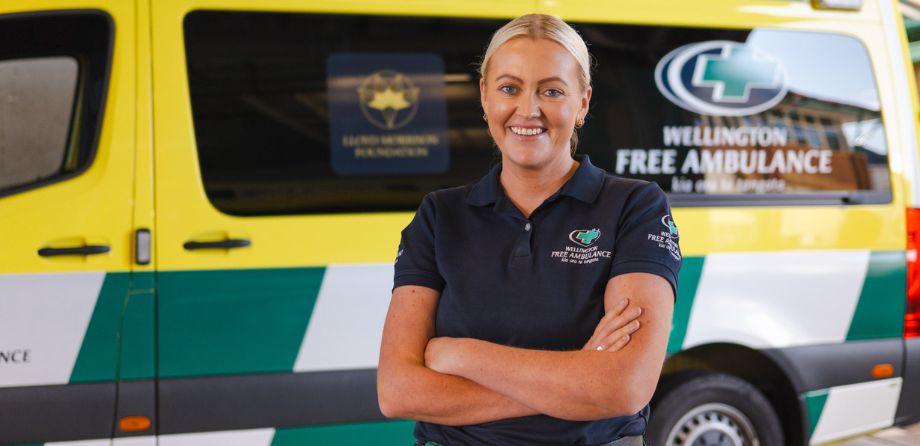
Head of Clinical Communications Hannah is one of the paramedic stars of Onesie 2026! Here she talks about her journey with Wellington Free, including what she enjoys most about her role.
Q: Tell us about your journey with Wellington Free Ambulance.
My journey with Wellington Free Ambulance has allowed me to see patient care from many different perspectives. I started my career on the road as a paramedic, where I had the privilege of supporting people during some of the most challenging moments of their lives.
In 2015, I began working in the Clinical Communications Centre as a Clinical Paramedic Advisor, while continuing to work as an Extended Care Paramedic on road. Splitting my time between the two roles gave me a unique view of the patient journey and a deeper appreciation for the critical work that happens both on the frontline and behind the scenes.
I was immediately drawn to the complexity of the Clinical Communications Centre. The clinical decision-making, coordination, and expertise required to support incidents from the moment a 111 call is received through to their resolution was something I found both challenging and incredibly rewarding.
As my career progressed, I became increasingly passionate about the role the Clinical Communications Centre plays in delivering patient care. Every role within the centre contributes to patient outcomes, yet much of that work happens out of sight and is often underappreciated.
Q: What inspired you to make the transition from frontline ambulance work into the Head of Clinical Communications?
While I loved working on the road, I became fascinated by the broader coordination and decision-making that happens behind the scenes. The Clinical Communications Centre plays a critical role in ensuring patients receive the right care at the right time, and I saw an opportunity to have a positive impact across the whole service.
Q: How has your experience as a paramedic shaped the way you lead the Clinical Communications Centre team today?
My 10+ years on the road gave me a firsthand understanding of the realities and pressures our frontline crews face every day. That perspective helps me make decisions with empathy and a practical understanding of what teams need to do their jobs effectively.
It also reminds me that every call, conversation and clinical decision represents a real person who needs our help. I encourage our team to stay patient-focused, collaborative and supportive of each other because I know how important that support is when you're working in high-pressure environments.
Q: For those who may not know, what does the Clinical Communications Centre do, and what does a typical day look like for you?
From triaging both emergency and non-emergency calls, dispatching emergency ambulances and patient transfers, through to providing clinical advice and support to frontline crews, the Clinical Communications Centre plays a critical role in connecting patients with the right care at the right time. Every decision and interaction contributes to the patient journey, often long before a clinician arrives at their side.
Our team works closely with ambulance crews, healthcare providers and partner agencies to coordinate care, support clinical decision-making and help navigate patients to the most appropriate pathway for their needs.
No two days are ever the same in my role, which is one of the things I enjoy most. A typical day might involve supporting the team through operational challenges, contributing to service improvements, working with stakeholders across the health and emergency services sector, and ensuring we have the people, systems and processes in place to deliver safe, effective and patient-centred care.
Q: What are some of the biggest challenges and rewards of leading a team?
One of the biggest challenges is attracting and retaining great people in a role that can be incredibly demanding. The work is rewarding, but it can also be emotionally challenging. Our teams work shifts around the clock and support people during some of the most stressful moments of their lives.
As a leader, that means creating an environment where people feel supported, valued and connected to the purpose behind what they do. Looking after our people is just as important as delivering great service. The most rewarding part is seeing the difference our team makes every day. While much of our work happens behind the scenes, the Clinical Communications Centre plays a critical role in supporting patients, frontline crews and the wider health system. Helping people get the care they need, while also seeing our staff grow, thrive and support one another, is incredibly fulfilling.
Q: With both you and your husband working at Wellington Free Ambulance, how do you balance busy careers with raising a family and spending quality time together?
Like most working families, balance is something we continue to work on rather than something we've mastered! Our jobs can be busy and unpredictable, so communication, flexibility and planning are essential.
We make a conscious effort to protect family time and be present when we're together. Having a shared understanding of the demands of emergency services certainly helps, and we're fortunate to be able to support each other through the challenges and celebrate the wins together.
Q: What gives you the greatest sense of purpose in your role today?
For me, it's knowing that our team plays a vital role in helping patients access the right care at the right time.
Every day they use their clinical expertise, communication skills and sound judgement to assess patient needs, support frontline crews, coordinate resources and connect people with the most appropriate care pathways. The impact they have on patient outcomes is significant, and I feel privileged to work alongside such a dedicated group of professionals.
Q: What does a really good day at work look like for you?
A really good day is one where we've successfully supported our teams through challenges, worked together to solve problems and delivered excellent outcomes for patients.
It's also a day where people feel valued, supported and connected to our purpose. When the team finishes the day knowing they've made a difference, that's a successful day for me.
Q: Looking back on your career, what are you most proud of?
I've been fortunate to have several opportunities and achievements throughout my career, but the moment that stands out most wasn't tied to a qualification, or specific project.
A staff member once told me, "You have a mind for business and a heart for people. I can tell you genuinely care about us as staff and about your patients". That has stayed with me ever since.
As a leader, I've always believed that achieving great outcomes and genuinely caring about people shouldn't be mutually exclusive. We work in an environment where we have to make difficult decisions, manage competing priorities, and focus on delivering a sustainable service, but we also need to remember that our people are at the centre of everything we do.
To have someone recognise that balance in me was incredibly meaningful. If the people I work with feel valued, supported and cared for, while we're also delivering the best possible outcomes for our patients and organisation, then that's something I'm extremely proud of.
Q: What do you enjoy most about being part Wellington Free Ambulance?
It's the people. Every day I'm surrounded by individuals who are passionate, capable and deeply committed to helping their communities.
There's also a strong sense of purpose and connection across the organisation. Everyone, regardless of their role, contributes to the same mission of providing quality care and support when people need it most. Being part of that is something I'm very proud of.